Twocents Case Study
A Human-Centered Approach to Accessible Entrepreneurship
Brief
During IDEO’s 7-week course in Human Centered Design, I worked in a 3-person team with Jaclyn Jeffrey-Wilensky and Caralyn Farrell. Our team was tasked with finding solutions to the question: “How might we enable more young people to become social entrepreneurs?”
Outcome
Based on our research with local community members, we created prototypes and mockups for TwoCents, an upvote-based community where users submit common problems and propose innovative solutions. The project concluded after the research phase, but initial prototypes yielded a wealth of data to inform future implementation.
Techniques
User Surveys / User Interviews
Storyboards / Service Design
Brainstorming / Affinity Mapping
Prototyping / Usability Testing
Contents
01. Inspiration
We began our research project with the goal of supporting local entrepreneurs and encouraging young members of the community to become founders.
““While more and more youth are interested in social entrepreneurship as a means for tackling some of the world’s toughest challenges, many aspiring social entrepreneurs fail to move beyond the initial idea phase because the infrastructure to support them is lacking.”
”
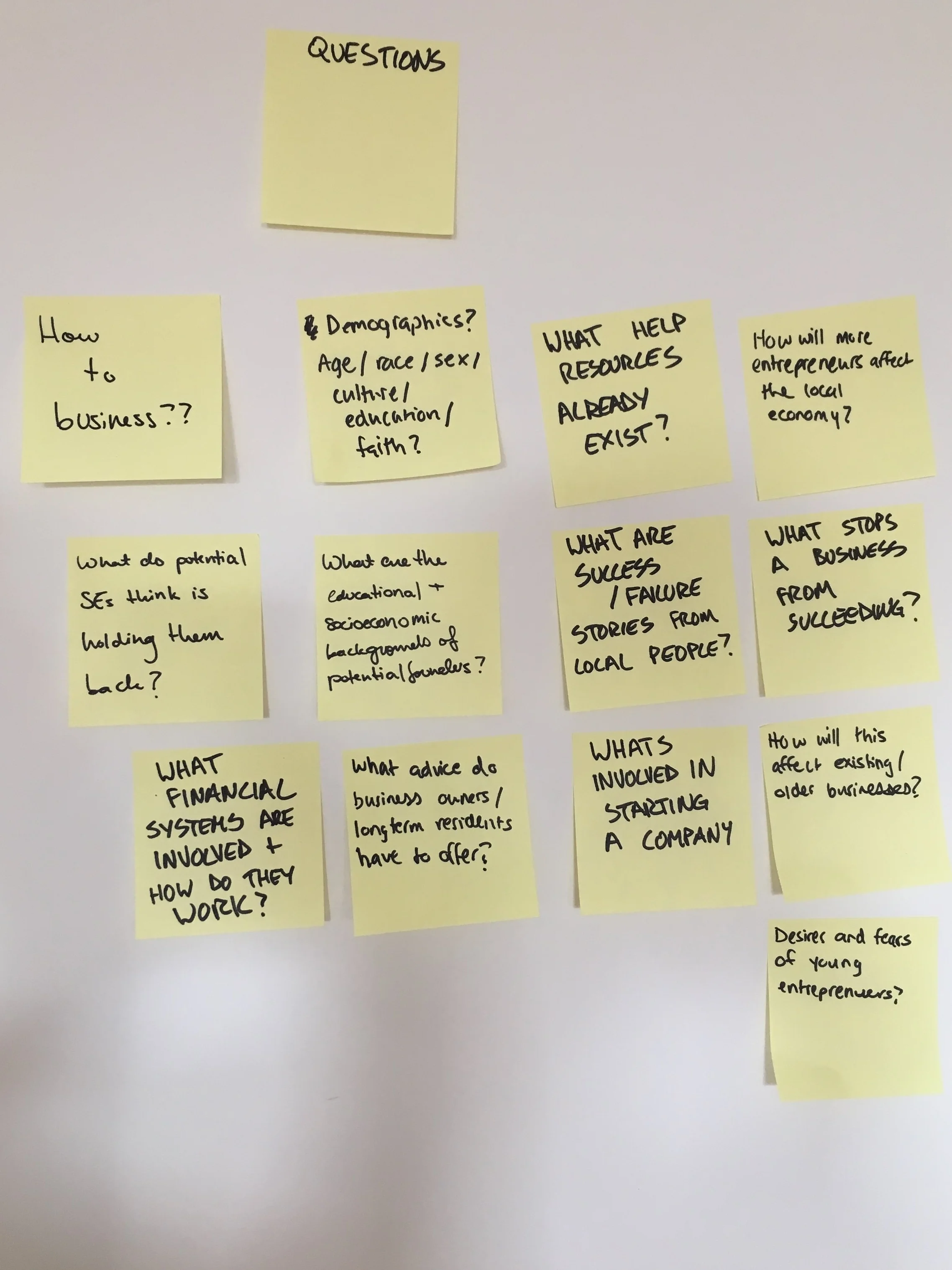
To understand more about the challenges facing potential entrepreneurs, we interviewed three members of our local community.
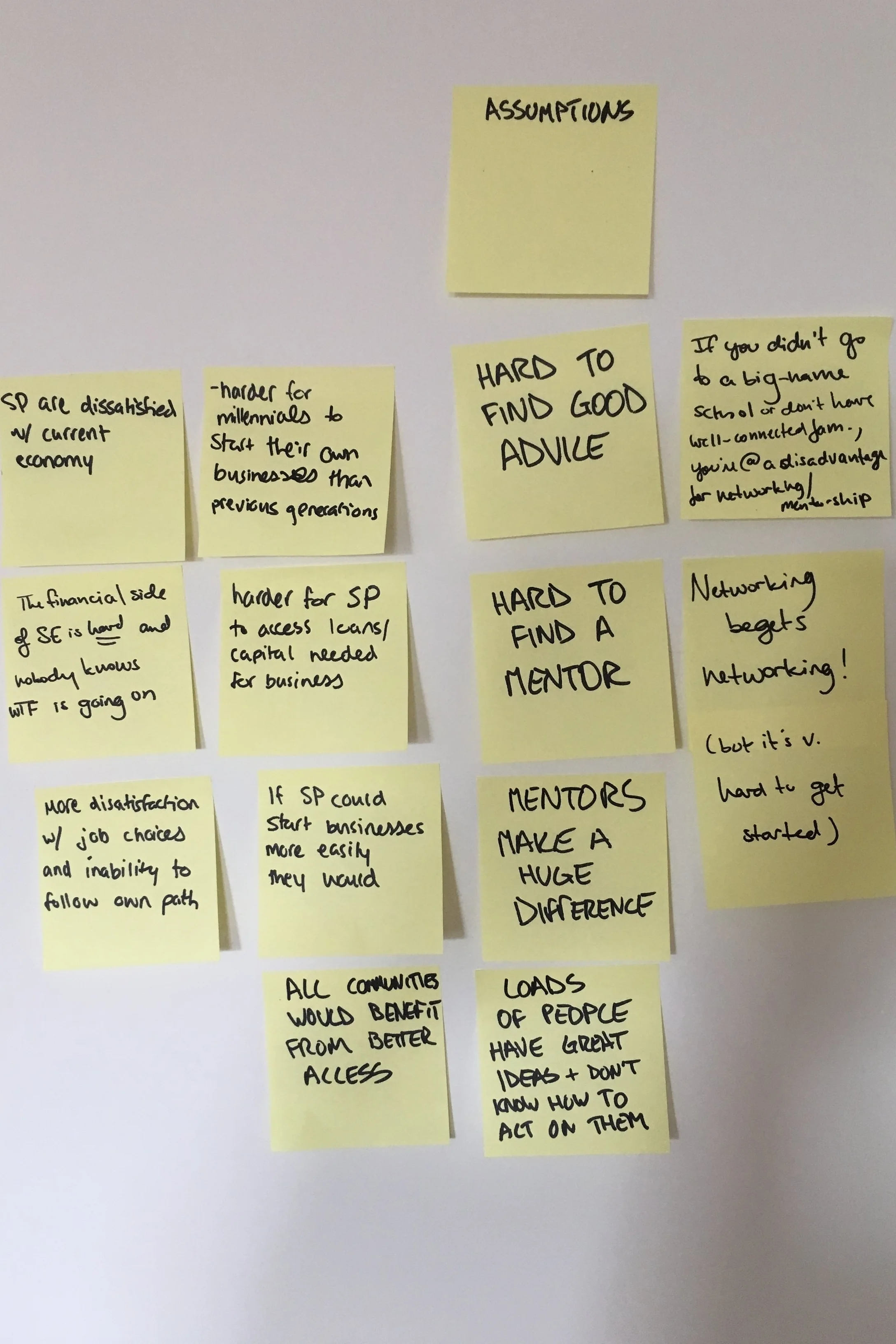
The three subjects all worked retail jobs and had limited means and almost no professional network. The first two interviewees self-identified as entrepreneurial. One had already started a small candle business, and the other had an interest in business strategy. They told us that working a job during college had made it difficult for them to build their professional networks or to find good business advice.
Our “aha moment” came while speaking with the third interviewee.
At first, she told us she had no interest in entrepreneurship. As we continued to ask questions, however, we learned she did have an idea for a tattoo service, but that she was not confident anyone would sign up for it. She agreed that if a certain number of people were to express interest in her product, she would consider starting a business.
We also spoke with two experts to learn more about the challenges facing potential entrepreneurs.
The first expert was a “serial entrepreneur” who had founded several successful international startups. His key contribution was the insight that any viable business must be solving a specific, real problem.
It can be a challenge to identify the right problem and ensure they are legitimate needs for the target market.
The second expert was an interaction designer in Sydney who had created and managed a successful mentorship program. She explained that free mentorship programs have a retention problem; since mentees are receiving the service for free, they are minimally invested and it is easy for them to drop out. Her team designed workarounds to account for the attrition rate.
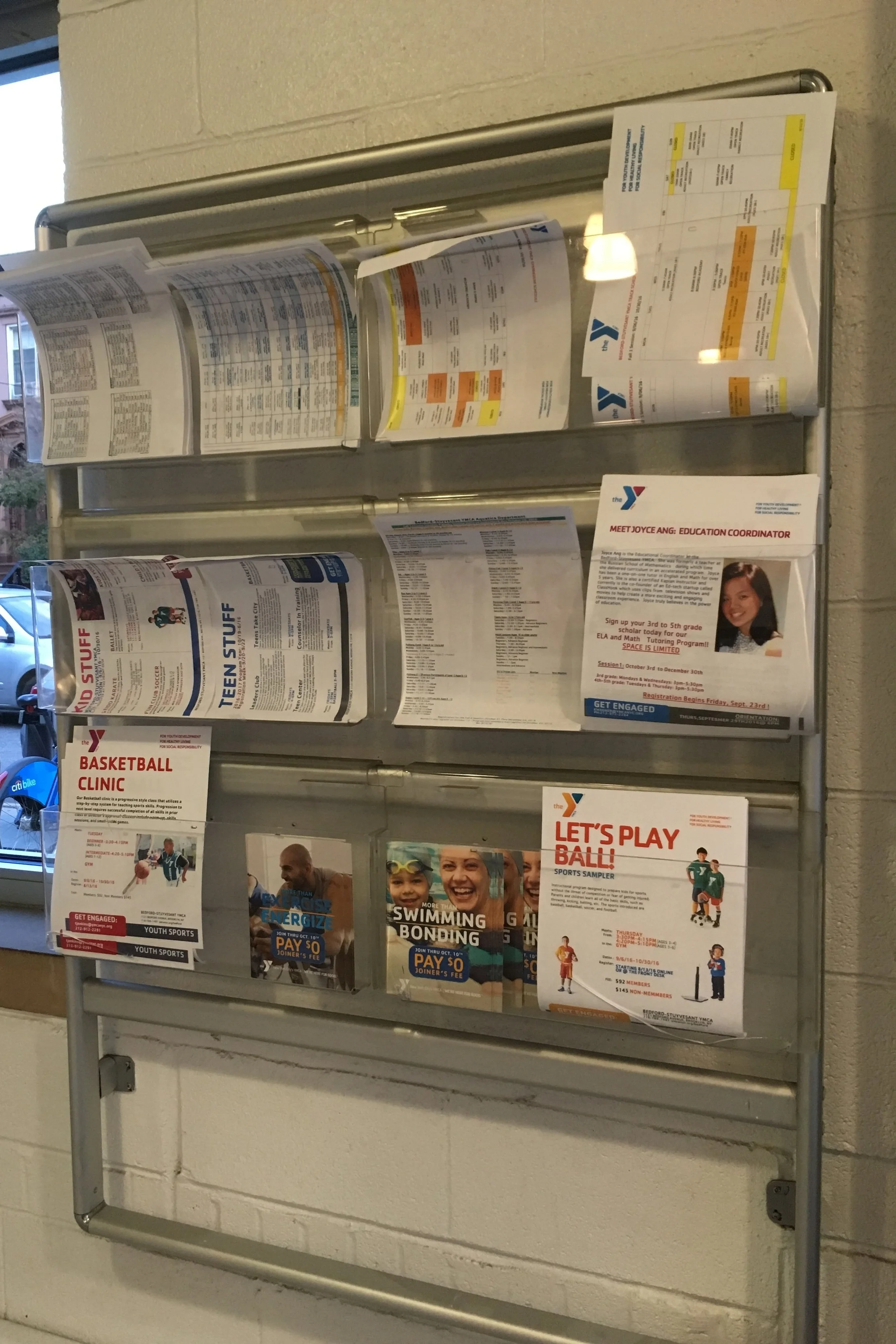
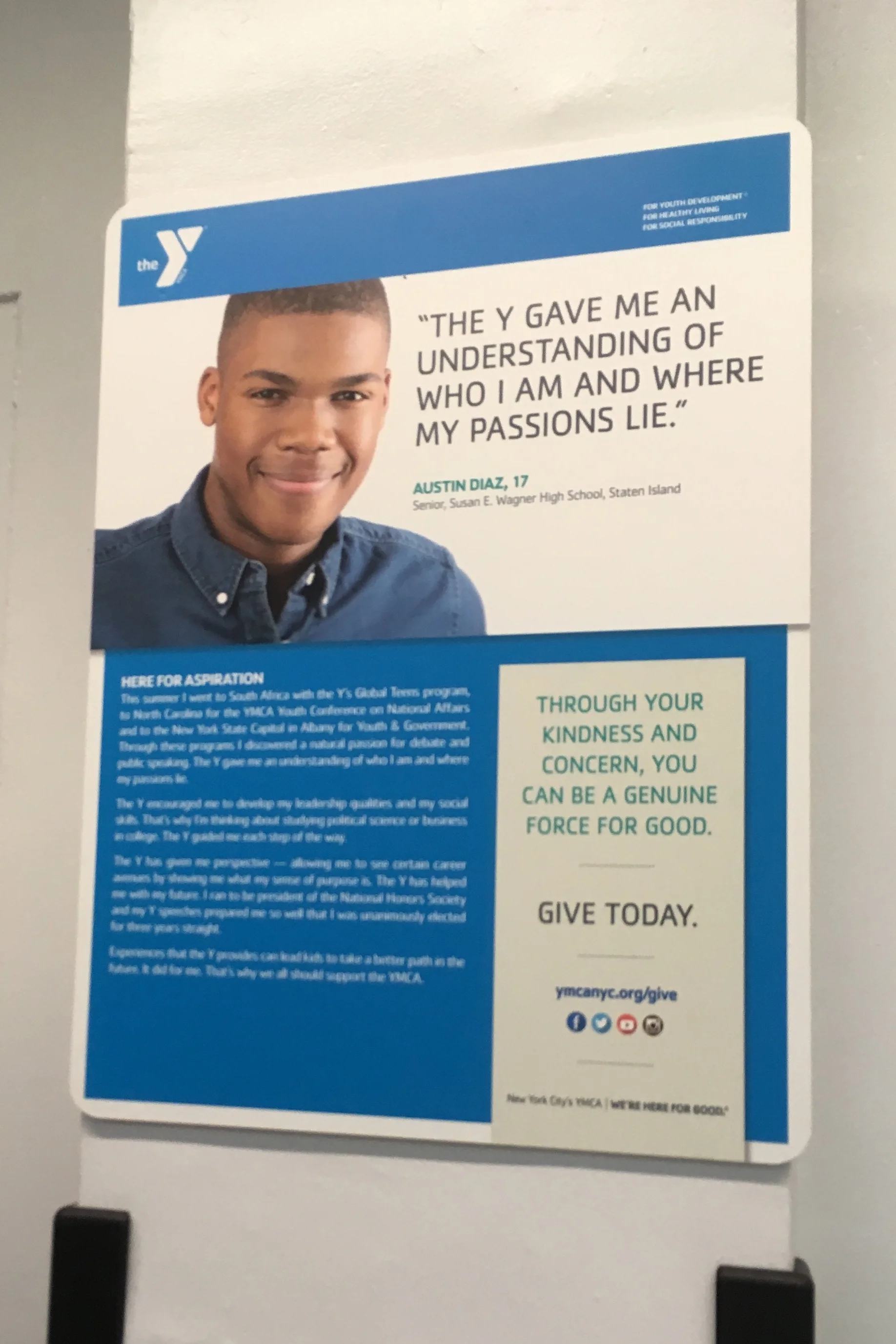
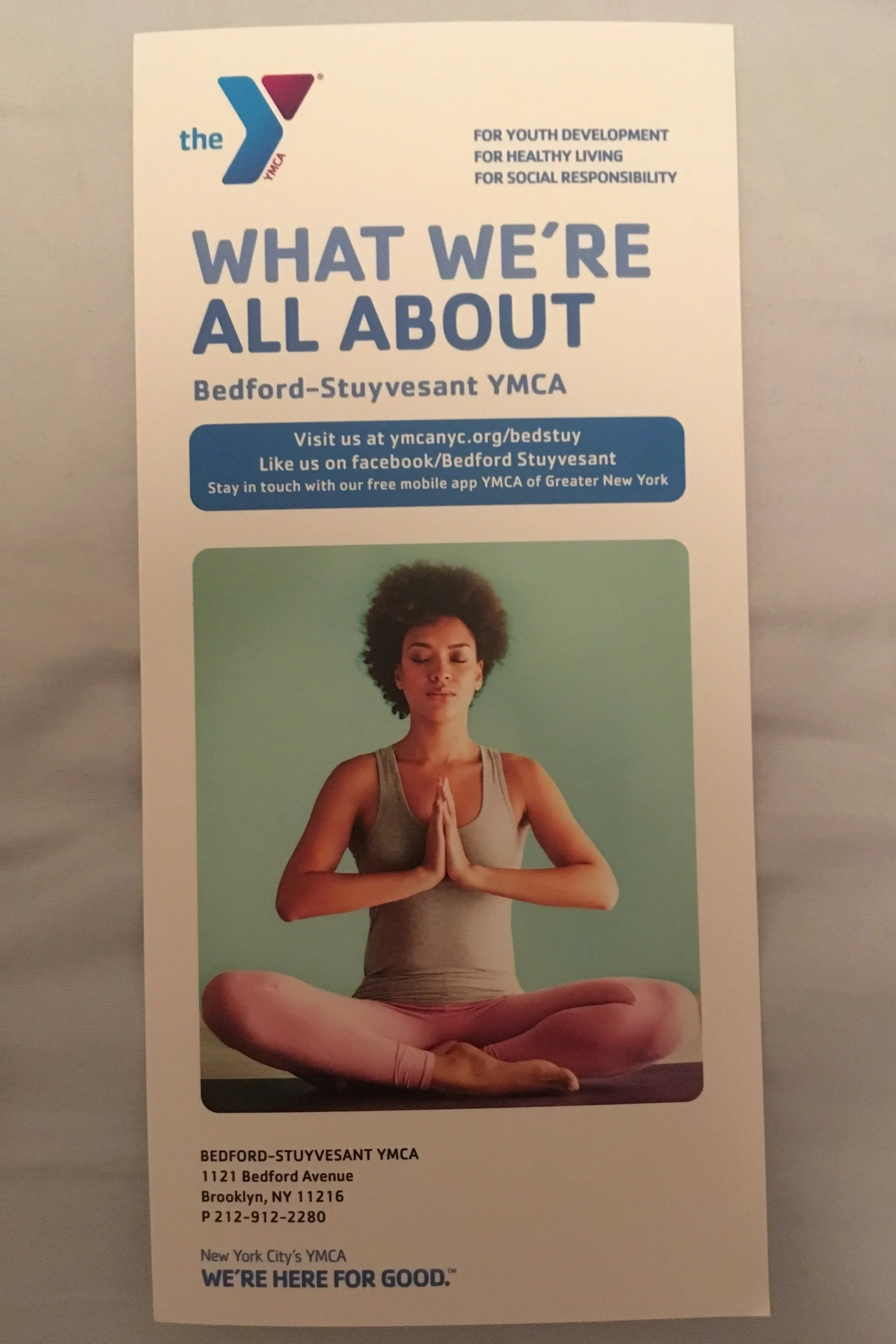
We also visited the Bedford-Stuyvesant branch of the YMCA for analogous inspiration. We hoped to learn how a social impact enterprise might be branded and marketed.
We were impressed by how positive and aspirational the YMCA’s messaging was.
We learned that businesses which solve social problems need not feel spartan or bleak, and we emerged with new inspiration for how to present our solution to users.
02. Synthesis
We collected our research learnings and affinity mapped them to identify major themes, then distilled these themes into three key insights. From these insights, we then formed three "how might we" questions to articulate the problems we were trying to solve.
Insight
It's difficult to find out if there's a real market for your idea, especially if you lack guidance.
Question
How might we enable potential entrepreneurs to identify and research potential markets?
Insight
It’s hard to find mentors to provide guidance, as there are too few of them available.
Question
How might we incentivize potential mentors to take part in mentorship programs?
Insight
The demands of entrepreneurship are unrealistic for those living paycheck-to-paycheck.
Question
How might we help potential entrepreneurs who have no disposable income to kickstart their ideas?
03. Ideation
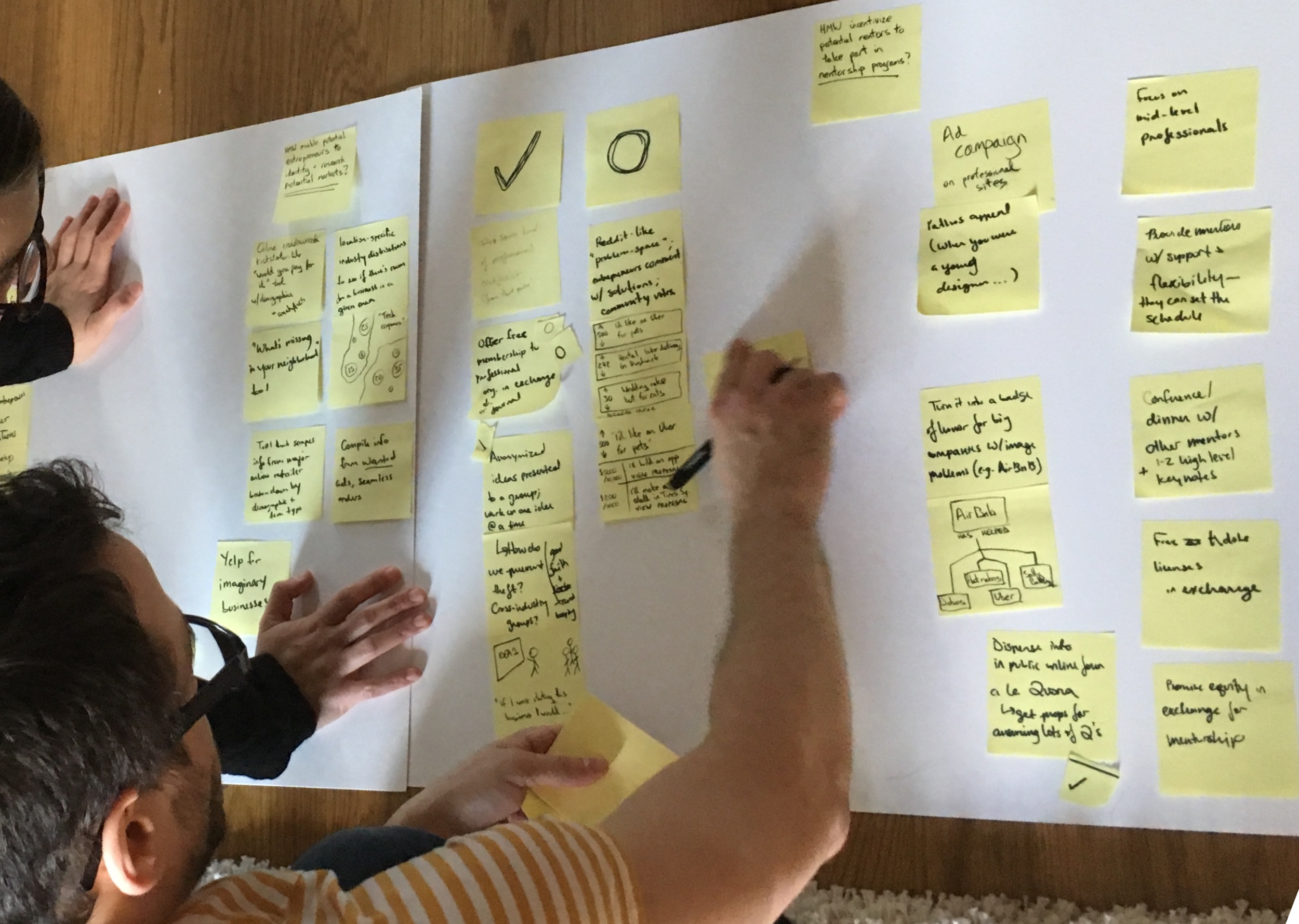
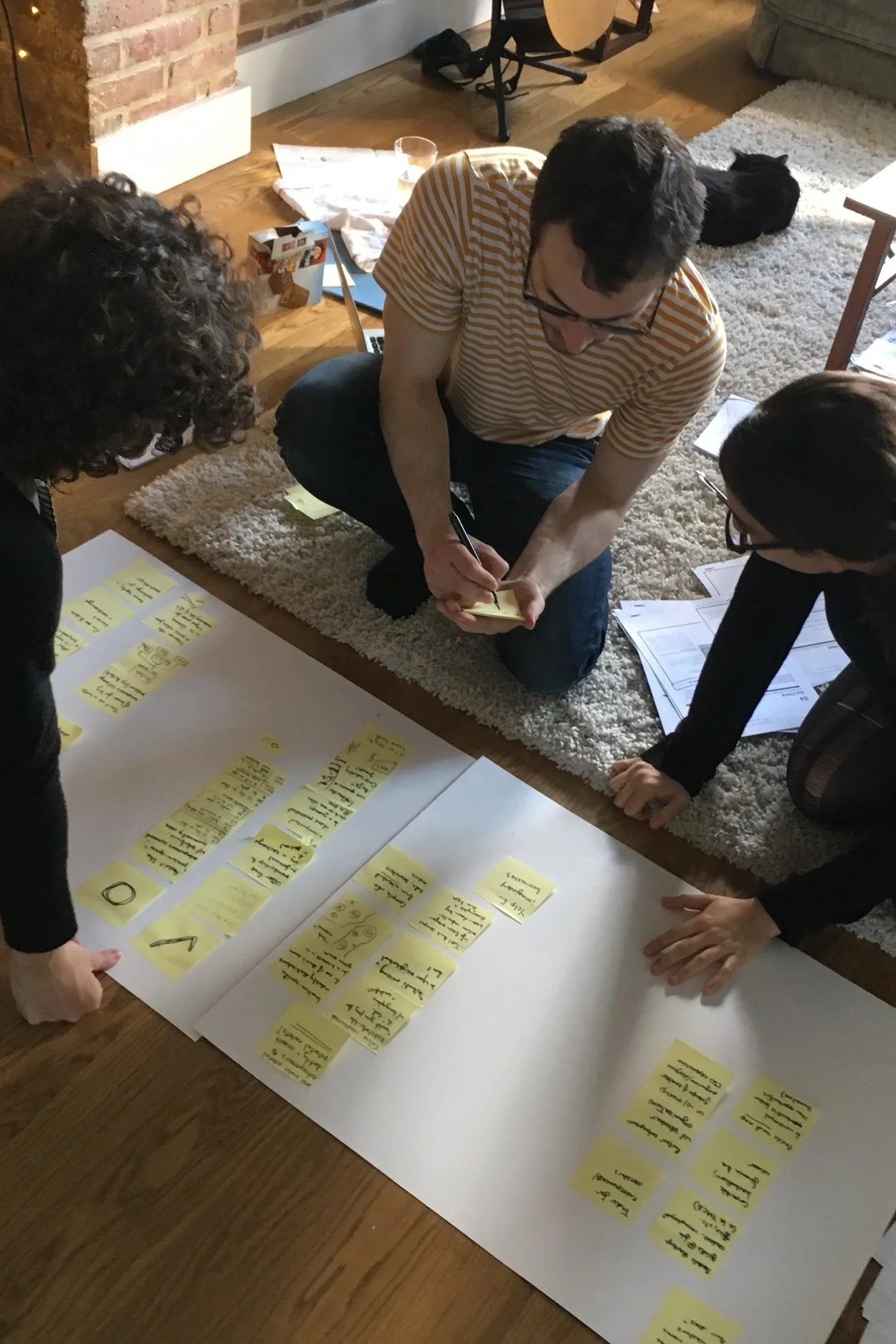
We conducted a brainstorming session, where hundreds of ideas were generated and discussed.
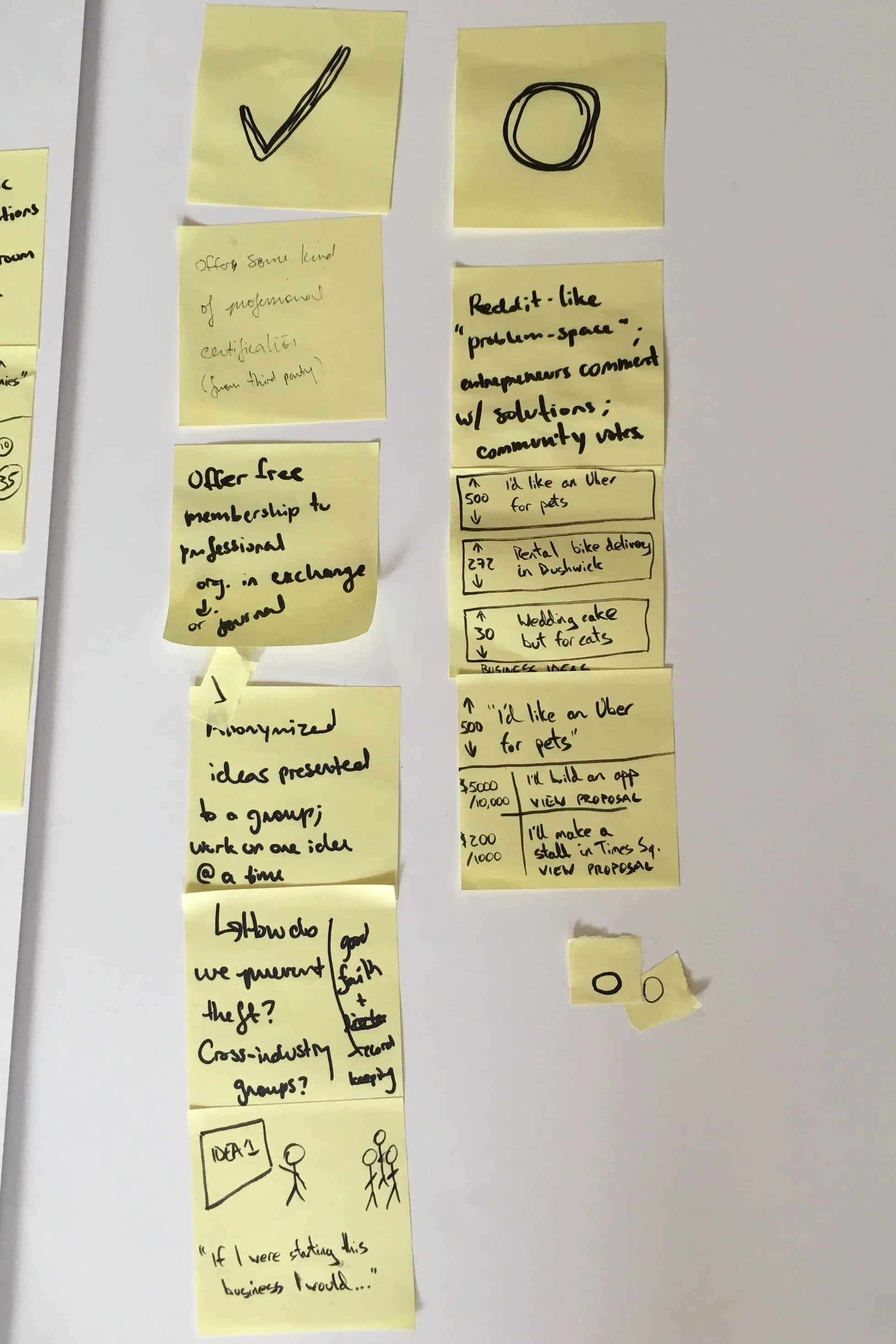
Some of our discarded ideas:
A tool which maps the locations of business so entrepreneurs can find geographical gaps in the market.
A meetup group in which anonymously submitted ideas were critiqued and developed by a group of peers.
An app that compiles information from wanted ads and Seamless orders to tell you which business are missing in your neighborhood.
A Tinder-like app to match entrepreneurs with investors.
Ultimately, we decided on a solution to the first question; "How might we enable potential entrepreneurs to identify and research potential markets?"
The proposed solution was a Reddit-like discussion board in which users submit problems and potential entrepreneurs respond with solutions. We gave it the working title "TwoCents".
The community would vote on the problems they think are most important and the solutions they like best.
One innovative aspect of this idea was that the community could donate very small amounts of money – not to fund the idea, but as a concrete expression of their support. We hoped this might mitigate the tendency of internet communities to express enthusiasm for an idea but not follow through in a meaningful way.
We wrote a storyboard which highlighted key stages in a potential customer’s journey, from first discovering the site, to joining a discussion, to adding a problem or submitting a proposal. We also looked at possible retention mechanics to encourage repeat visits.
04. Prototyping
We created three rapid prototypes, to test certain core assumptions of our idea. The prototypes were not intended to mimic the final product, but instead to isolate a specific element of our solution which could be tested.
Prototype 1 was a subreddit designed to be similar to the discussion space of the TwoCents site, to find out if people would be willing to participate.
Our first prototype appeared to fail spectacularly. Even after we created some sample contributions, none of the participants we linked to the subreddit submitted any questions or comments.
To find out why, we followed up with some of our visitors. We learned that making a Reddit account in order to contribute was too inconvenient. Participants also expressed concern about potential abuse by trolls or bots. To minimize these issues, we decided to add single sign-on functionality to our final design so that visitors could use their existing social media accounts.
Our second prototype was a survey to discover what it would take to convince entrepreneurs there was a market for their idea.
Specifically, we wanted to answer this question:
“Is there a certain dollar amount an individual could donate which would convince a potential entrepreneur they had that individual’s support? Or perhaps a certain number of people expressing interest?”
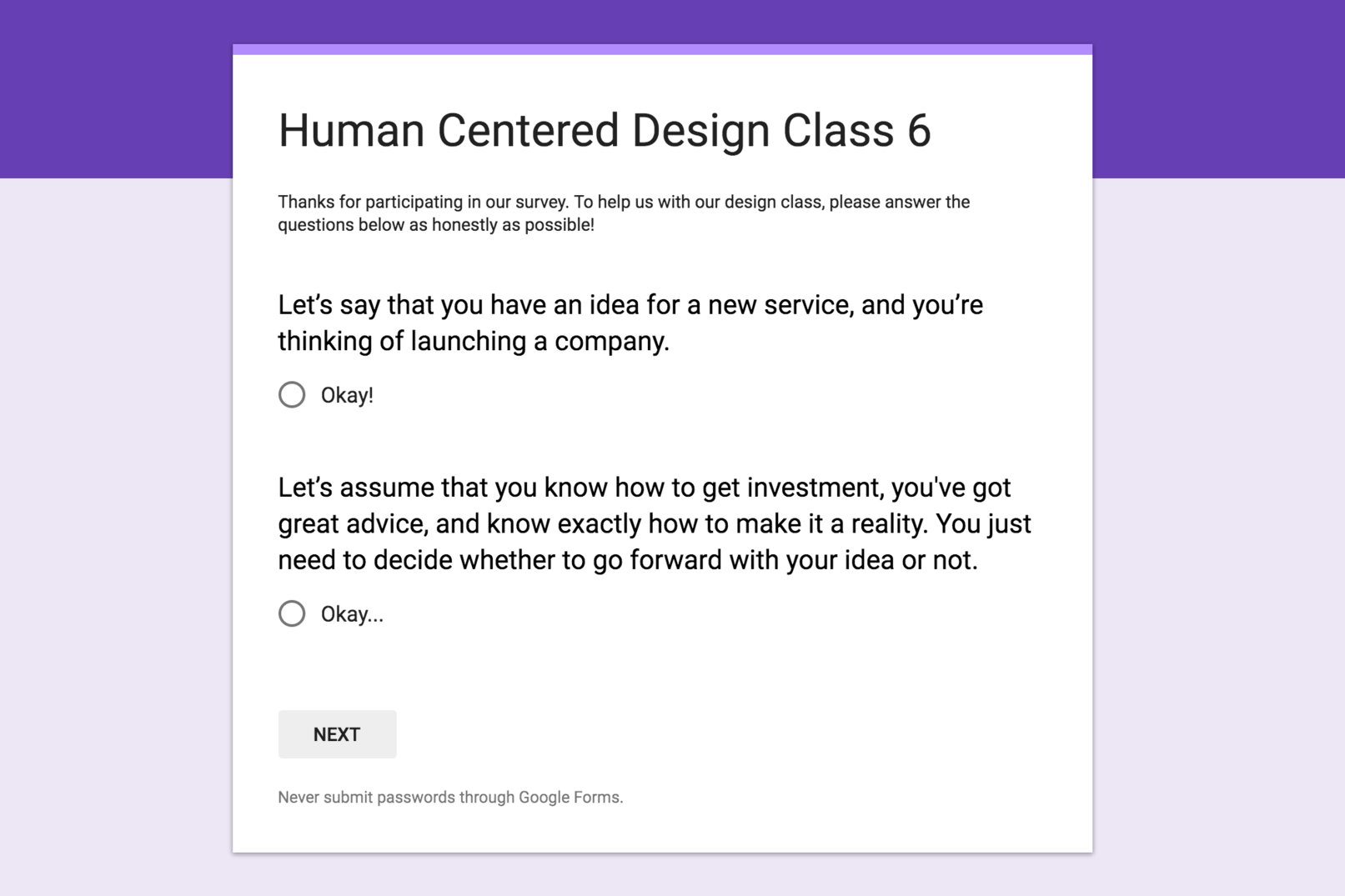
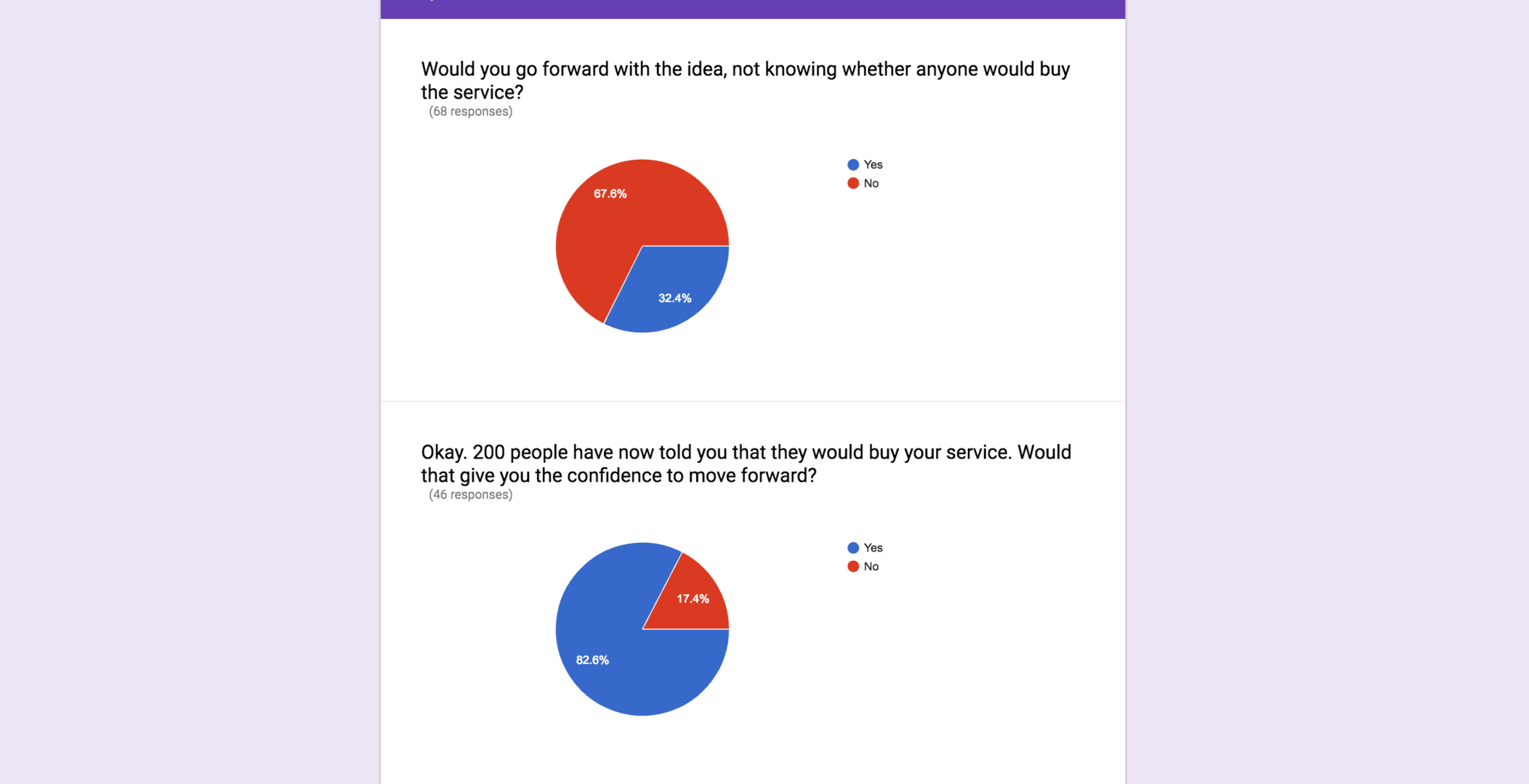
Our survey garnered 68 responses. We learned that a small amount of money was not enough to convince entrepreneurs that their ideas had support. Instead, it was the number of people who expressed interest that was most influential in the decision of whether or not to move forward with an idea.
Furthermore, there was confusion over the purpose of the donations. Respondents assumed the money was to fund the idea, rather than to demonstrate sincere support. Some of this confusion may be attributed to the informal language of the survey; in future research projects, I would take care to write surveys more precisely.
Our third prototype was a low-fidelity mockup of three pages from the TwoCents site, which I made in Balsamiq.
The goal was to find out how easy it would be to communicate the concept of the site to new users. We used this mockup to conduct user testing with three individuals.
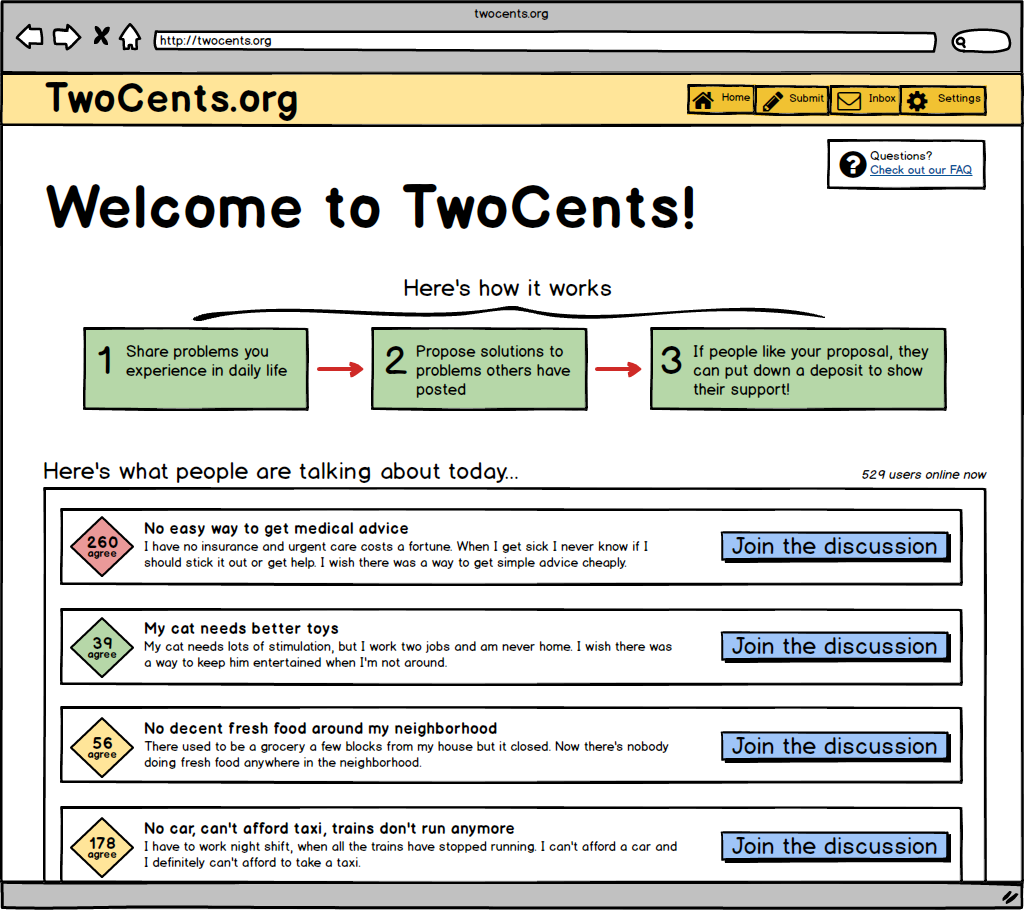
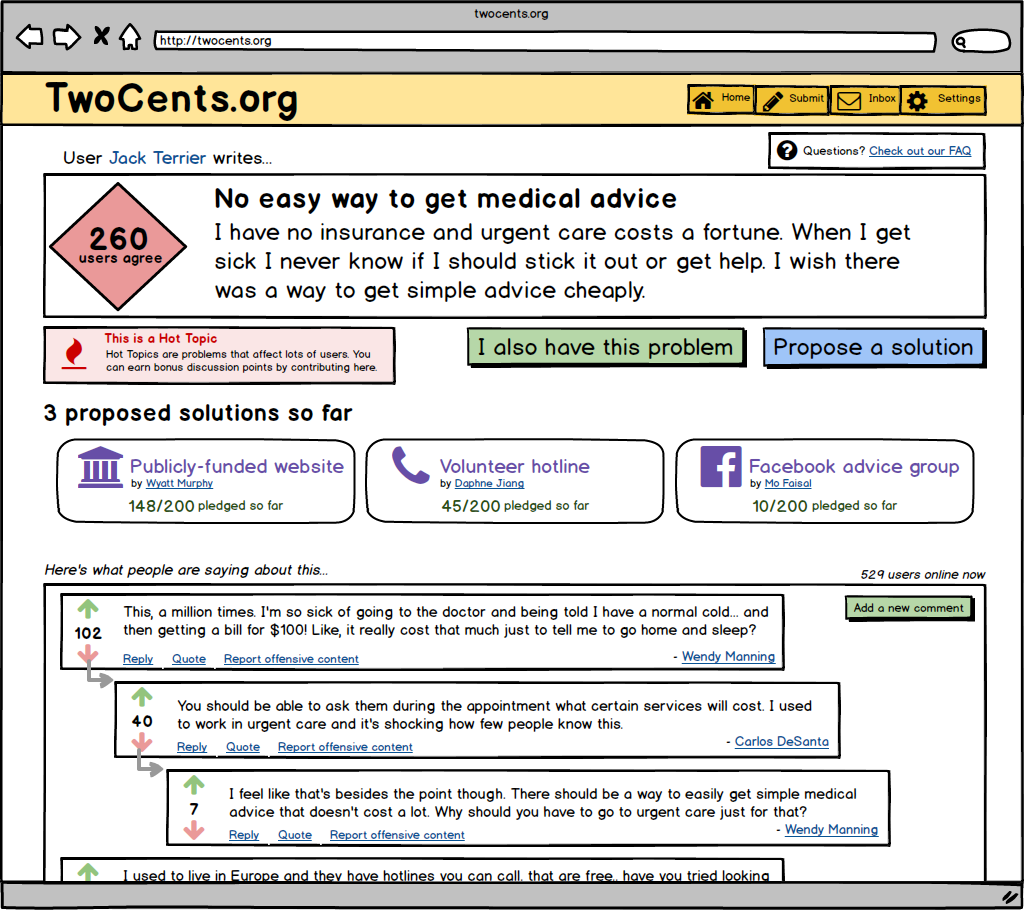
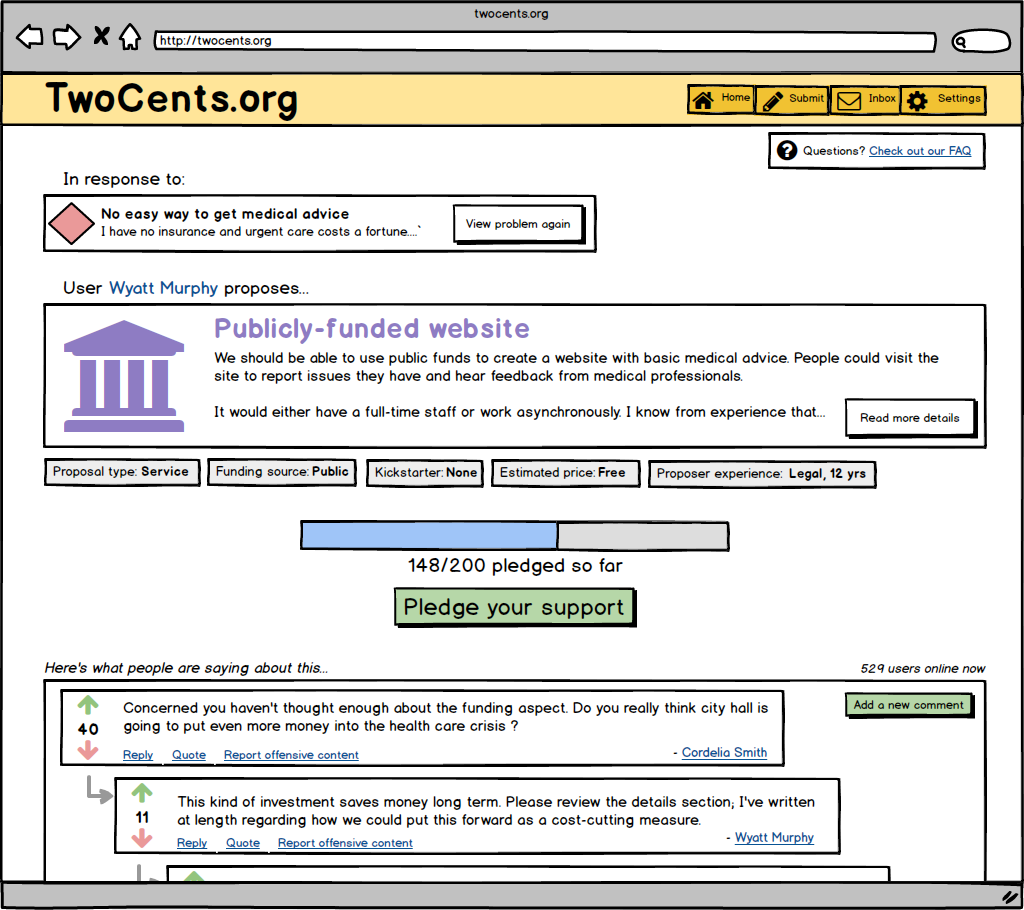
This approach uncovered many issues we could improve in future iterations. Participants were also distracted by the colors used in the prototype - a good reminder of why wireframes should usually be monochrome.
Test users did not understand the scope of the problems to be discussed. Should users submit personal problems, like a misbehaving pet, or huge problems, like poverty and healthcare? The geographical scope was also unclear. To address these issues, we decided to adopt a Craigslist-like location taxonomy, with distinct state-wide, city-wide and neighborhood discussion boards.
Test users were also confused by the micro-donation feature. They didn’t understand where the money was going, or why. There was also anxiety over whether clicking certain buttons would cause their account to be debited immediately.
Together with the insights from the second prototype, these findings led us to discard the micro-donation feature of TwoCents.
Instead, we opted to give users a single daily vote – a resource scarce enough that users would spend it sincerely.
05. Implementation Plan
Because the Implementation phase was outside the scope of the Human Centered Design course, we did not release a live prototype. This would have answered questions around branding, and tell us whether TwoCents would resonate with the market.
Instead, we drafted an action plan to map the future development of the project if it were to be taken forward.
We decided that an engineer, a product manager, and a designer should be hired to implement the project. The engineer would implement the site itself; the product manager would prioritize and coordinate the rollout of the product’s features; the designer would ensure the final result was usable and true to the goals of our users.
For funding, we entertained the possibility of running TwoCents ourselves, but ultimately decided that the challenges inherent in supporting an online community with a limited budget might distract from the social mission of the project. Instead, our primary goal would be to integrate with a partner organization. For example, Kickstarter or similar sites could benefit from a system like TwoCents which is designed to encourage entrepreneurship.
06. Elevator Pitch
2Cents.org is an environment for potential entrepreneurs to explore the problems of their local community. Through collaborative discussion, 2Cents sows the seeds of entrepreneurship within the affected community itself.
Any community member can submit problems, which entrepreneurs can propose solutions for. This ensures that both the problems and solutions are grounded in the needs of the community, encouraging locally-sourced, human-centered approaches to problem-solving.
A pledging system gives entrepreneurs the confidence to take their ideas forward, perhaps to a fundraising platform or to seek out seed investment.